George Maxwell 1870 - 1957

George Maxwell was a Catholic layman, third order Dominican, Distributist, proprietor, and
carpenter, who embodied in his lifestyle the ideals and attributes that the Distributist
League and the Catholic Land Movement were attempting to Propagate.
Originally a coach builder from Birmingham England, in 1922 Maxwell was introduces by Fr.
Vincent McNabb, to join the community of craftsmen and Distributists in Ditchling.
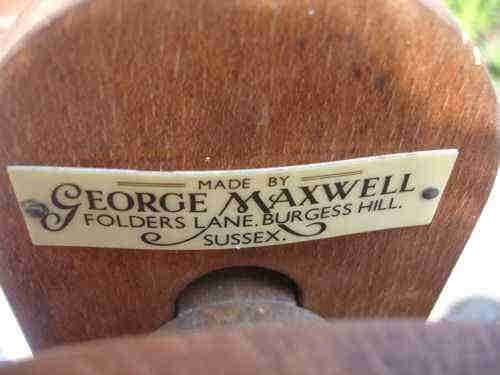
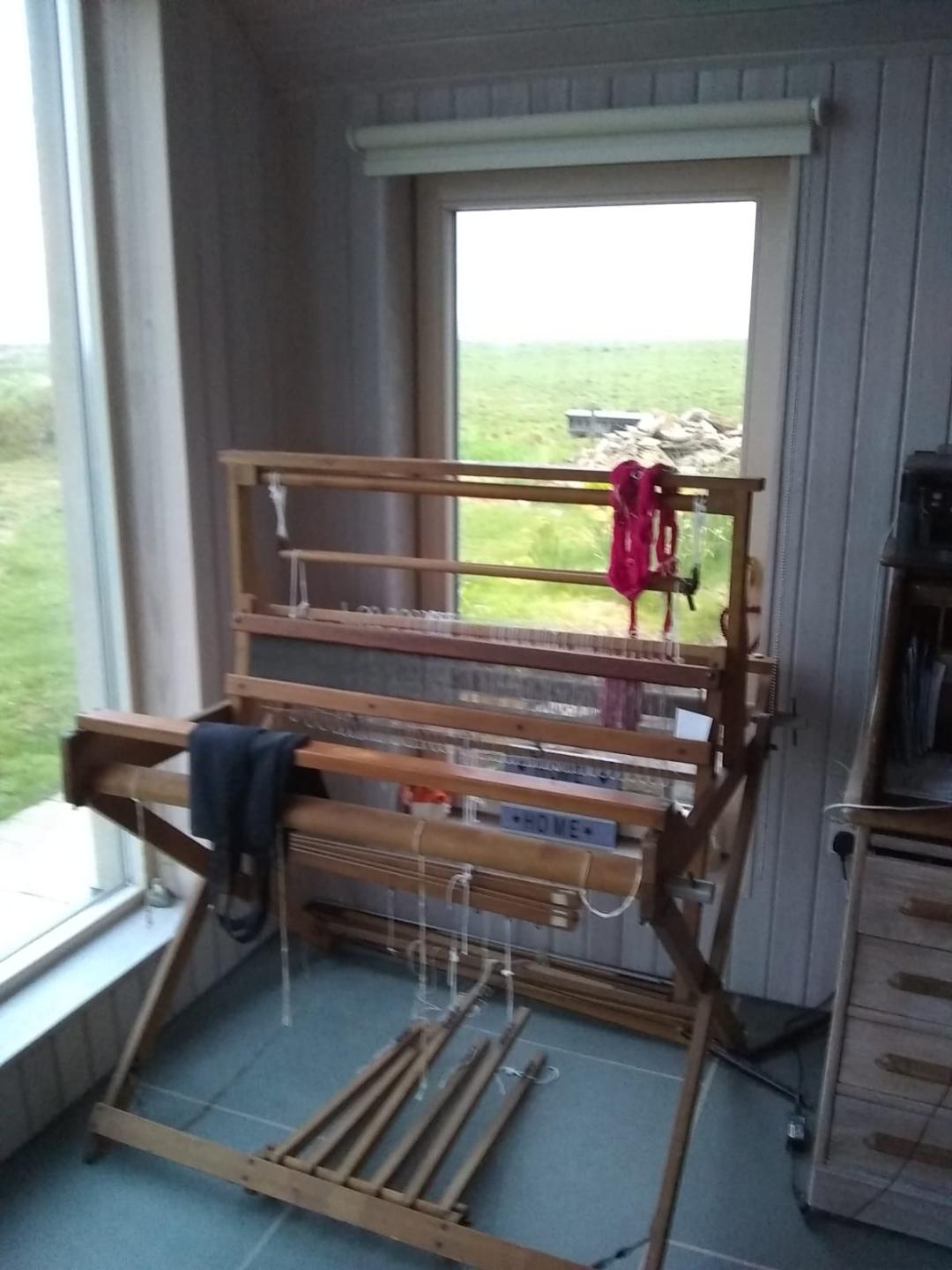
Maxwell was a handy man, skilled as a carpenter, wheelwright and loom-builder. When he came
to Ditchling, he became a member of the Guild of St. Joseph and 5t. Dominic established by
Eric Gill and Hilary Pepler to foster Catholic craftsmanship. The Guild followed the
principle of “individual human responsibility being a fundamental of Catholic doctrine,
and this principle involving the principles of ownership, workmen should own their tools,
their workshops, and the product of their work". As one of the village's most skilled
carpenters, Maxwell built his own carpenter's shop in order to provide furniture and
other objects for the community, as well as furniture for his own home, the Ferrers.
During the 193Os he built his first loom, and in the aftermath of WWII he expanded this
craft, supplying looms to art schools and workshops throughout England. As an accomplished
amateur builder, Maxwell built his own home at Ditchling and, along with the workshop for
St. Dominic’s Press, several houses that belonged either to the Guild, (incorporated for
business purposes as the Spoil Bank Association, Ltd.), or members and supporters living
in Ditchling. He lived the Distributst ideal, working in his company while managing the
land and livestock on his smallholding.
Guildsmen such as Maxwell were required to be Third Order Dominicans. Guild members met
twice a day to recite the psalms and hymns of the Little Office of the Blessed Virgin
Mary, according to the Dominican rite, in the small chapel built near the workshops on
the common.
Maxwell was an extremely knowledgeable Thomist, and he knew many other philosophers both
ancient and modern. He was therefore considered to be Ditchling's "resident philosopher",
and one of the deepest thinkers amongst the Distributists. His house was in fact the
principal port of call for the men of the Guild to argue and talk over their ideas.
He held rigidly to what Michael Sewell (later Fr. Brocard Sewell) calls the “stricter"
school of Distributism, thinking even Belloc and Chesterton heterodox (not conforming
with accepted or orthodox standards or beliefs), on certain points. As an illustration
of his intransigence, in later life he began to disapprove of some of Maritain's
philosophies, (he was influential in the development and drafting of the Universal
Declaration of Human Rights), and as a result many of the Distributist league members
saw Maritain in the light in which St. Thomas saw Aristotle as "the" philosopher.