In 1907, Eric Gill, a twenty-five year-old stone-carver, left Hammersmith in West London and moved to Ditchling, a
small village in the heart of the Sussex countryside. This self-imposed exodus was a direct result of Gill's increasing
belief that country life was far preferable to that in the sprawling metropolis. Six years later, Gill decided to go one
step further and move from the High Street to Ditchling Common in order to try his hand at self-sufficiency. He bought a
house and two acres of land, and eventually both he and his family began producing their own milk, butter, eggs and bread,
as well as making their own clothes. The family also kept pigs and hens. The commune was financed by the issuing of debentures.
Shortly afterwards, calligrapher Edward Johnston, who was born in 1872 and had previously shared lodgings with
Eric Gill, moved to Ditchling with his family. Meanwhile, Hilary Pepler, a hand printer, also joined the growing numbers.
These men became the founding members of the Guild of St. Joseph and St. Dominic, which became a colony based upon
craft and agriculture and the principles of 'a religious fraternity for those who make things with their hands'.
The Guild thrived for some seventy years, exercising a dominant and positive influence over Catholic art both in the
British Isles and abroad. As well as being firmly based upon religious values, the Guild also became important in a
political sense, too. Hilary Pepler's written work of the time spoke of the days when 'work shall be once more of the
nature of a sacrament, a pledge given by Man and a token received by God'. He also called upon workmen to be the masters
of their own production, and not the slaves of other men's profits.
The Guild grew steadily larger during the early 1920s. By this time, a whole rural community had come into being, consisting
of countless workshops, a laundry, allotment garden and chapel.
All seemed well until 1924, when Eric Gill decided to leave the Guild altogether. This came about soon after Gill visited
the monastery at Capel y Ffin in Wales, and suggested that the two communities should merge together. This would
have actually required one of the communities to relocate to the area inhabited by the other which, at the time, was a huge
and daunting task. The Guild at Ditchling refused to accept Gill's ambitious proposals, and he left Ditchling
altogether. Gill's departure had a terrible effect on some of the original founding members on the Common, who were
sorry to see him leave.
After 1924, all the original members of the Guild were Tertiaries of the Order of St. Dominic (the third level of
monasticism); although there were other Tertiaries in the community. In 1928, the Guild's strict regulations
were relaxed and it was agreed that not all members had to be Tertiaries. At this time, the Guild was being
maintained by Joseph Cribb, Hilary Pepler, George Maxwell and Valentine Kilbride, who were joined in 1927 by Bernard
Brocklehurst.
In the early thirties, many new ideas were incorporated into the general scheme of things, including group criticism sessions to
discuss and regulate the standards of work and a new marketing exercise, during which a pamphlet entitled 'Things For
Devotional and Liturgical Use' was published. Publication and photography costs were shared and the pamphlet was sent to
potential clients, becoming an early method of direct mailing.
Socially, the Guild was thriving. The climax of the year was the Fourth of August, St. Dominic's Day, when a whole
programme of events took place. Sports activities for children, tea in the orchard, drama and mimes for amusement, and
supper at a local pub in the evening.
In 1937, a telephone box was even considered, but as a result of the fact that electricity and power tools were
frowned upon in the workshops, it was eventually decided that a call-box would be sited in a nearby lane.
During the war years, both Maxwell and Kilbride lost sons. Meanwhile, Joseph Cribb, a talented sculptor, served as a
community air-raid warden for the British Home Guard. In 1949, it seemed that a younger generation was now at hand to
continue the tradition, as Edgar Holloway and wife Daisy Monica moved to Ditchling. Sadly, it was not to be. Meetings of
the Guild began to last minutes instead of hours and new recruits were put off by the resistance of some of the existing
members. The Guild eventually closed in 1989.
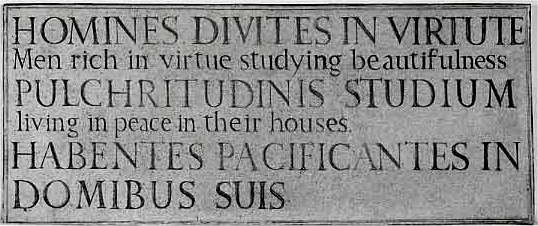
The Guilds philosophy was encapsulated in what today might be called its mission statement, engraved on a stone plaque,
now in Cheltenham Museum.
“ Men rich in virtue studying beautifulness living in peace in
their houses ”
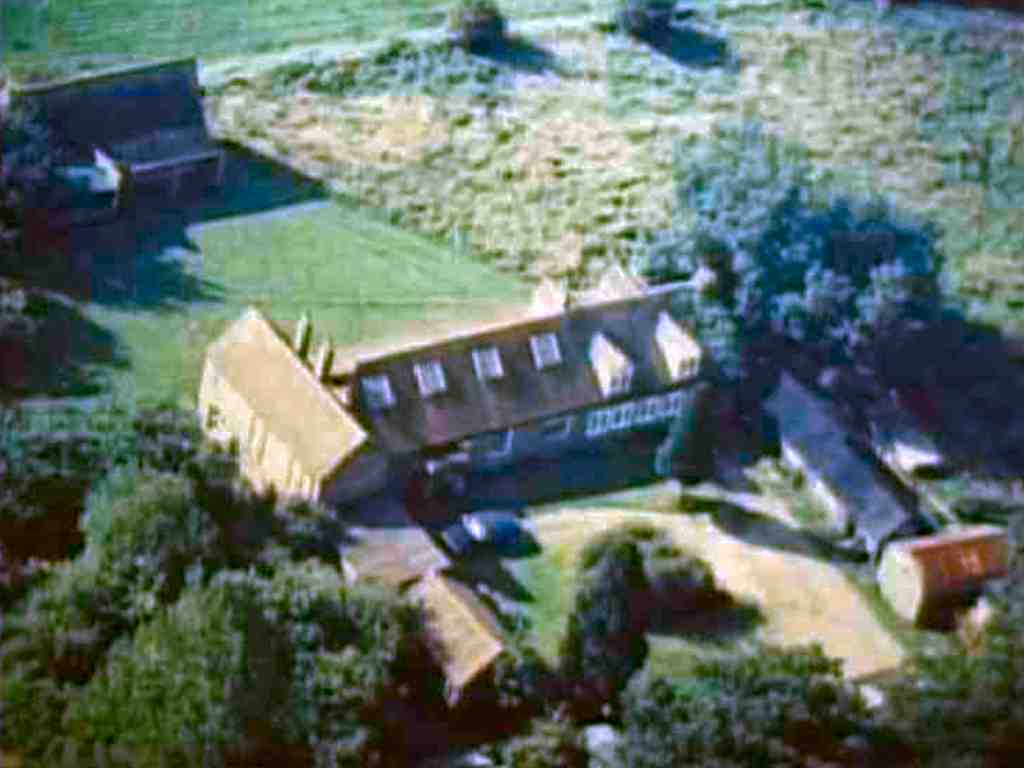
 The Guild buildings behind Hopkins Crank, at the end of Folders lane Burgess Hill, damaged in the great storm of 1987
 The Guild Chapel on the fourth of August, St Dominic’s day, included Sports activities for children,
tea in the orchard, drama and mimes for amusement
The Guild Chapel on the fourth of August, St Dominic’s day, included Sports activities for children,
tea in the orchard, drama and mimes for amusement
 The Guild Chapel
 Dunstan Pruden working in the Guild Workshop
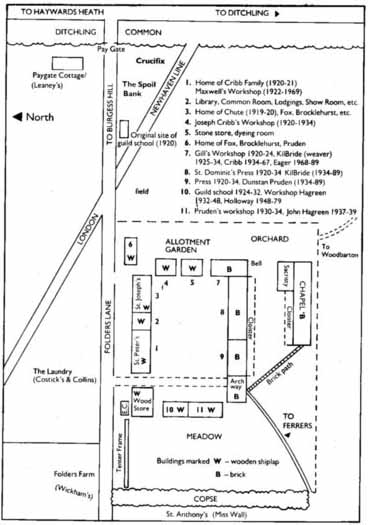 Map of the Guild Workshops damaged in 1987
The following photographs were taken by Peter Longstaff-Tyrell just before the destruction of the Guild workshops in 1989
 Guild Workshops as seen from the courtyard
 Guild Workshops as seen from the courtyard
 Building 7, 8 and 9 on the plan
 Interior view of the Chapel
 Exterior view of the Chapel
 Peter Brennan's sketch of the chapel, designed by Eric Gill to be the heart of the artistic community at Folders Lane.
The Gill "Spoil Bank" Crucifix was sold to the United States to pay for roof repairs
Peter Brennan's sketch of the chapel, designed by Eric Gill to be the heart of the artistic community at Folders Lane.
The Gill "Spoil Bank" Crucifix was sold to the United States to pay for roof repairs
 Guild Studio viewed from the orchard and allotment No 7 on plan
 Drawing of the guild buildings by P.F.Anson
 Interior of the chapel
 Plan of Ditchling Common
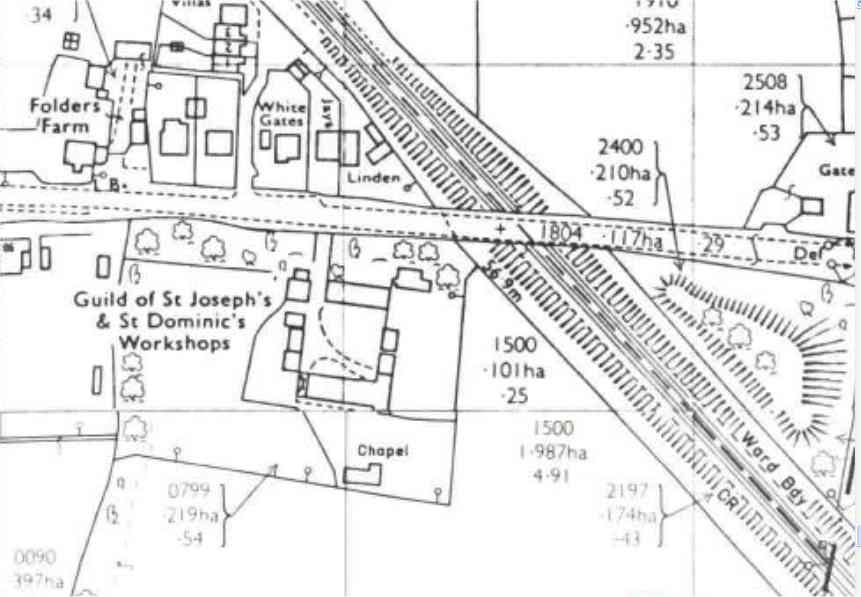 Map of the Guild workshops
