When Edgar Holloway began to etch, the once flourishing market for contemporary fine art prints was already in decline.
The etching in particular had enjoyed enormous popularity in Britain during the 1920s; it had become a symbol of good
taste; an affordable and original work of art. The unprecedented demand for prints led to their increased market value.
It was a time when many young artists as well as established painters turned to printmaking, seduced by the popularity of
etching and the large sums of money to be made. Edgar Holloway’s finely wrought etchings were readily accepted in a market
that praised and rewarded good craftsmanship – etchings and watercolours became his primary source of income. Holloway
was producing eighteen to twenty plates a year in the early ‘thirties, compared to, for example, Graham Sutherland’s four
a year at the height of the print boom. He earned his living with picturesque views of popular landmarks, cathedrals, ruins
and, when obtainable, commissioned portraits.
Edgar Holloway, born in Doncaster in 1914 the son of a miner-turned-picture-framer, was making linocuts by the age of ten
and drypoints at thirteen. He left school at fourteen, declining an offer to go to art school full time in favour of
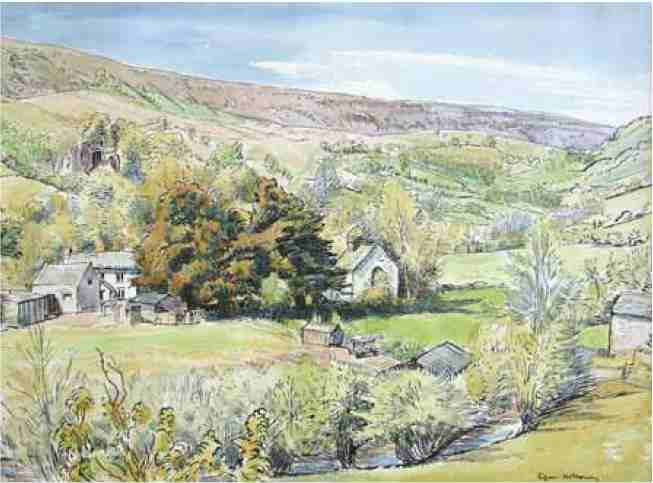
travelling the Yorkshire countryside in pursuit of suitable subjects for watercolours and drypoints to sell through his
father’s picture-framing shop. The Holloway family moved to London in June 1931 when Edgar was seventeen. His reputation
was established when he was given his first solo exhibition at the Twenty One Gallery off Regent Street, to critical acclaim.
At the same time his work entered public collections like the British Museum and the Victoria and Albert Museum.
At eighteen Holloway’s list of sitters for portraits included T. S. Eliot, Stephen Spender and Herbert Read. The genre for
which Holloway is most widely acclaimed is portraiture, and for his self-portraits especially. No other British artist
made so many etched self-portraits, twenty-seven between 1931 and 1996 creating what has now become a visual autobiography.
Holloway’s marriage in 1943 to Daisy Monica Hawkins, a former model to Eric Gill, was inspiring not only in his developing
interest in the work of Gill and particularly his attitude towards fine art and craft, but also in his fascination with
Monica as a model during the early years of their marriage. At first Holloway lived with his young family in Yorkshire,
then in Capel-y-ffin in the Black Mountains, and from 1949 on Ditchling Common, accepting an invitation to join the Guild
of St Joseph and St Dominic, he shared a studio with Philip Hargreen, and worked as a letterer, cartographer and designer
of book jackets for major British publishers. Holloway did not return to printmaking until he gave up commercial art in
1969. The romantic, plein-air responses to the Yorkshire landscape of Holloway’s early drypoints, and his exact recording
of architectural subjects, eventually gave way to a more sophisticated and expressive visual language.
Throughout his career Holloway has remained firmly outside mainstream concerns in contemporary art and his reputation has
fluctuated as a consequence. Now Holloway is once more finding his work in demand, rising on the tide of renewed interest
in the printmaking of the inter-war years. At ninety four, Holloway is fortunate to have witnessed the prevailing taste
turn full cycle and he can once again enjoy the interest shown in his work.
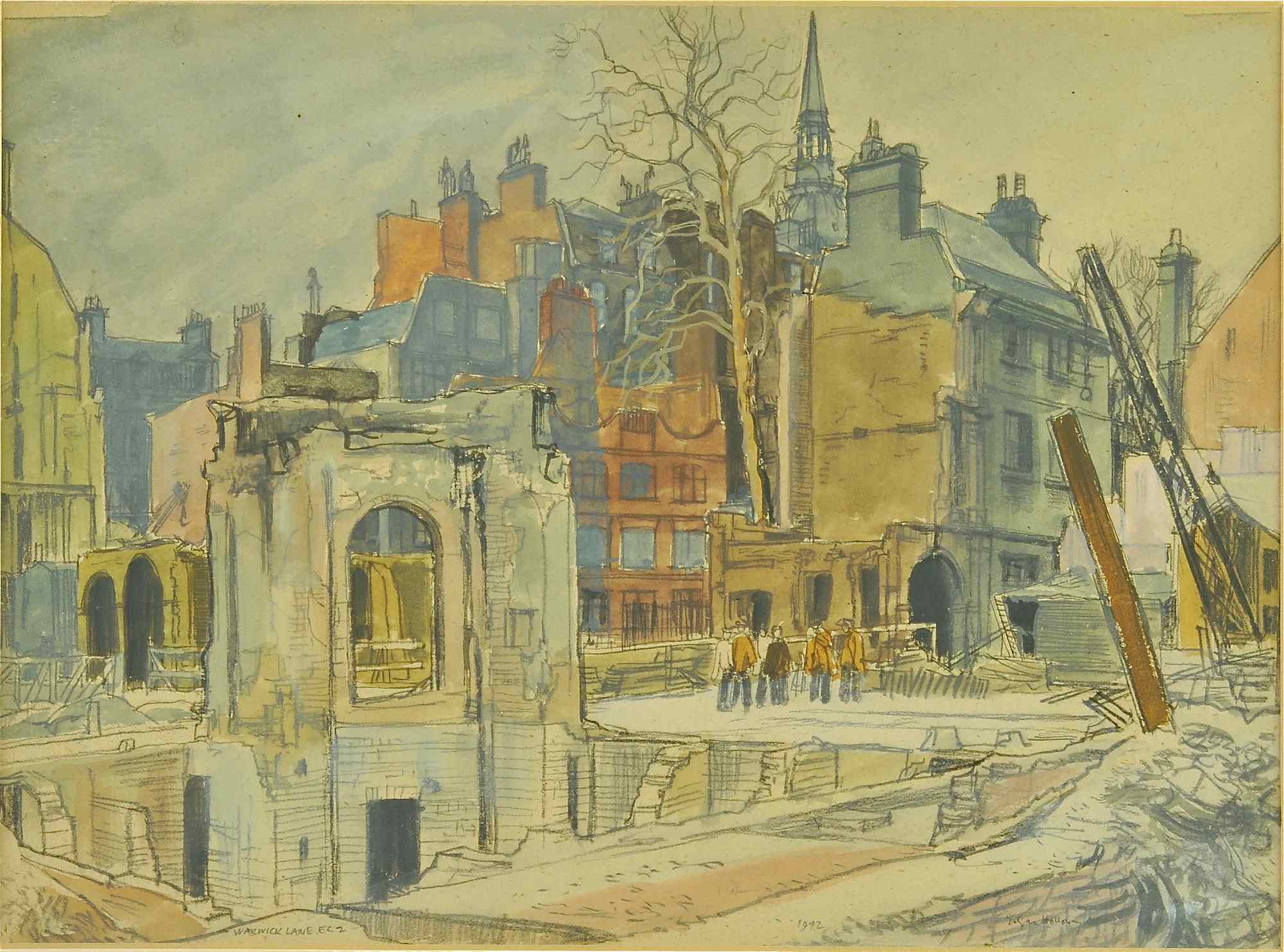 Foster Lane

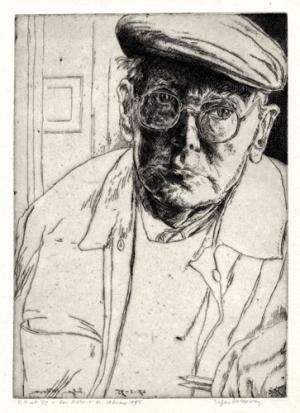
 Self portrait
 Self portrait
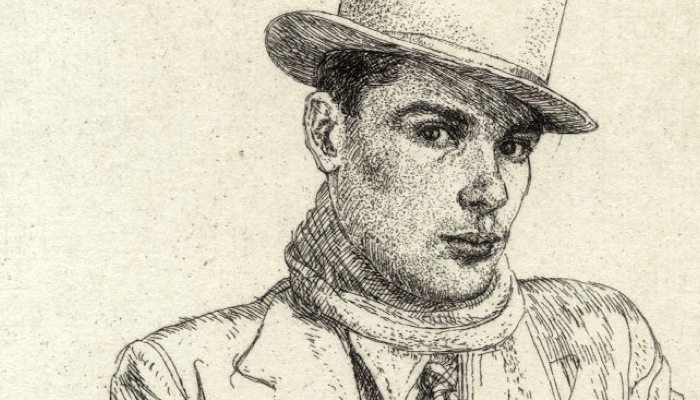 Self portrait


 Self portrait

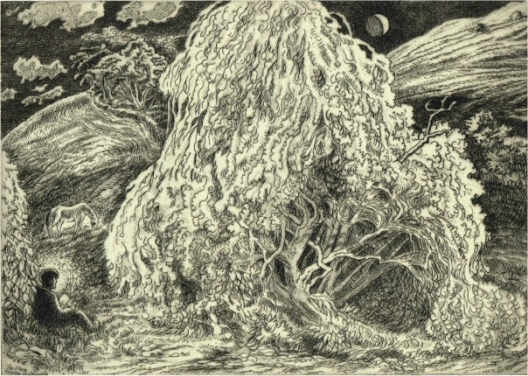 The Bride
The image is of trees at the foot of the South Downs near Ditchling covered with Old-Man’s-Beard.
The Bride
The image is of trees at the foot of the South Downs near Ditchling covered with Old-Man’s-Beard.
 Self portrait
 Edars wood block showing the guild workshops
 Photo of Edgar taken on the 24th of August 2008, aged 94 years