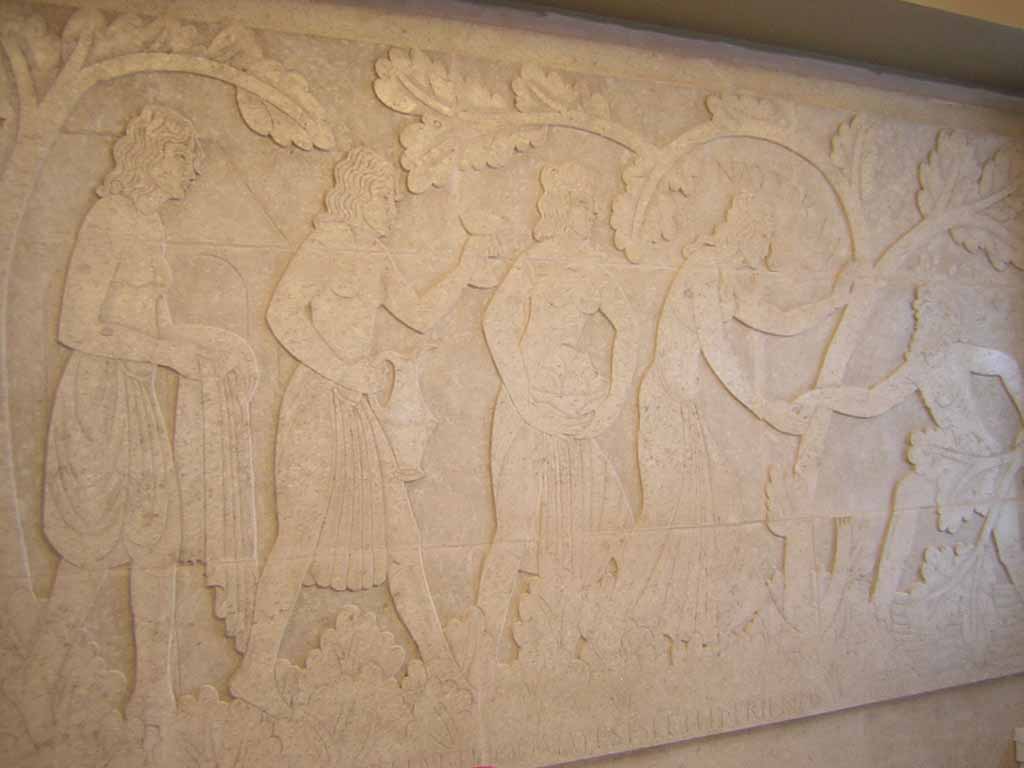
 Mural of Odysseus and Naucsica symbolising hospitality, in the Midland hotel Morecambe
The inscription is from the Odyssey by Homer Book VI which reads ”Then is there hope that thou shalt
see thy friends”
Mural of Odysseus and Naucsica symbolising hospitality, in the Midland hotel Morecambe
The inscription is from the Odyssey by Homer Book VI which reads ”Then is there hope that thou shalt
see thy friends”

 Nuns Priest
 Head of Girl, believed to be Gills daughter Petra. Ditchling Museum
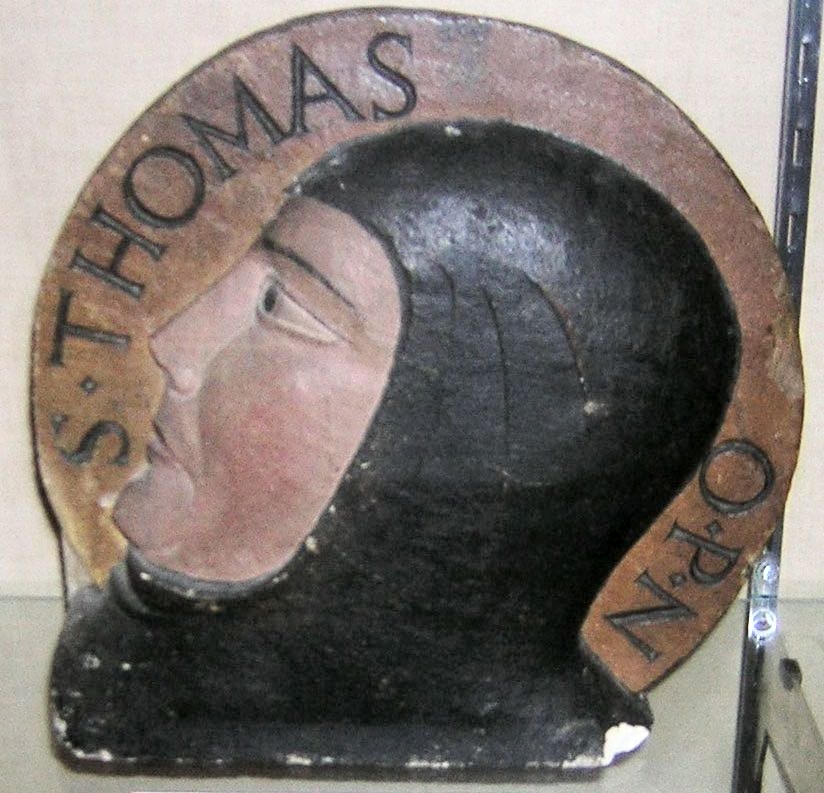 St Thomas. Ditchling Museum
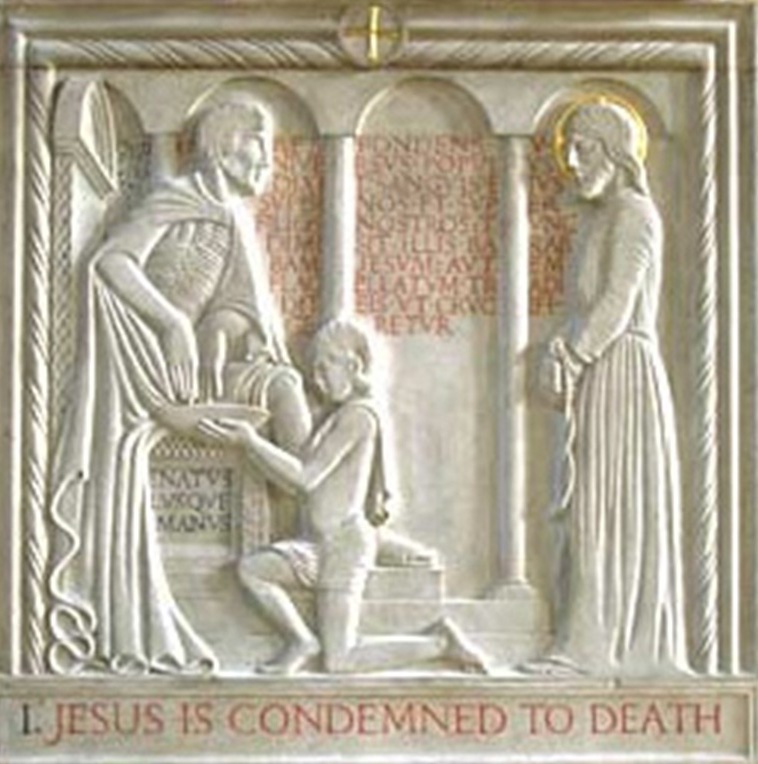 One of the fourteen "Stations of the cross"
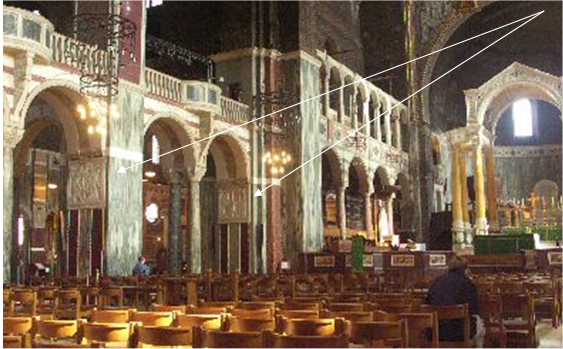 Two of the fourteen "Stations of the cross" in Westminister Cathederal
 Design by Gill made in 1914 for the fourteen "Stations of the cross" in Westminister Cathederal
 Prospero and Ariel from the Victoria and Albert Museum
 Mankind from the Victoria and Albert Museum
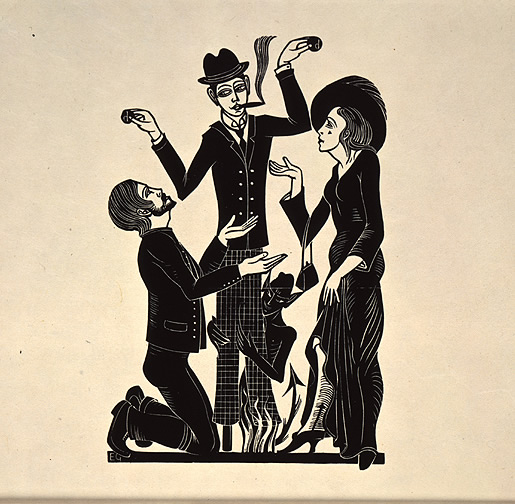 Print
Print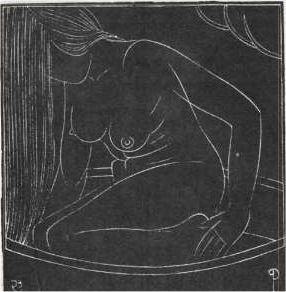 Gill study of his daughter Petra in a bath

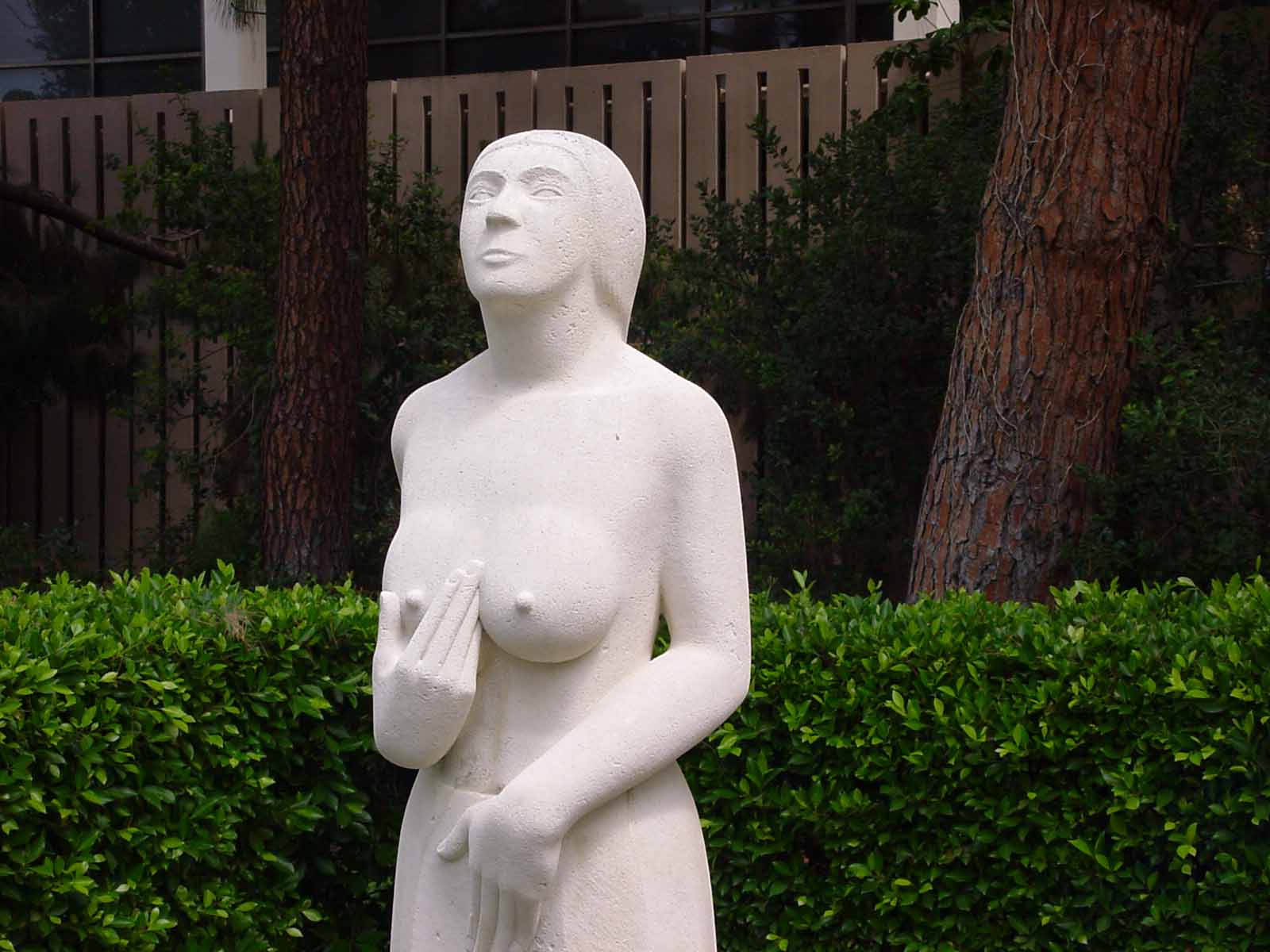 Mulier (BVM) statue in the Franklin D. Murphy Sculpture Garden UCLA California
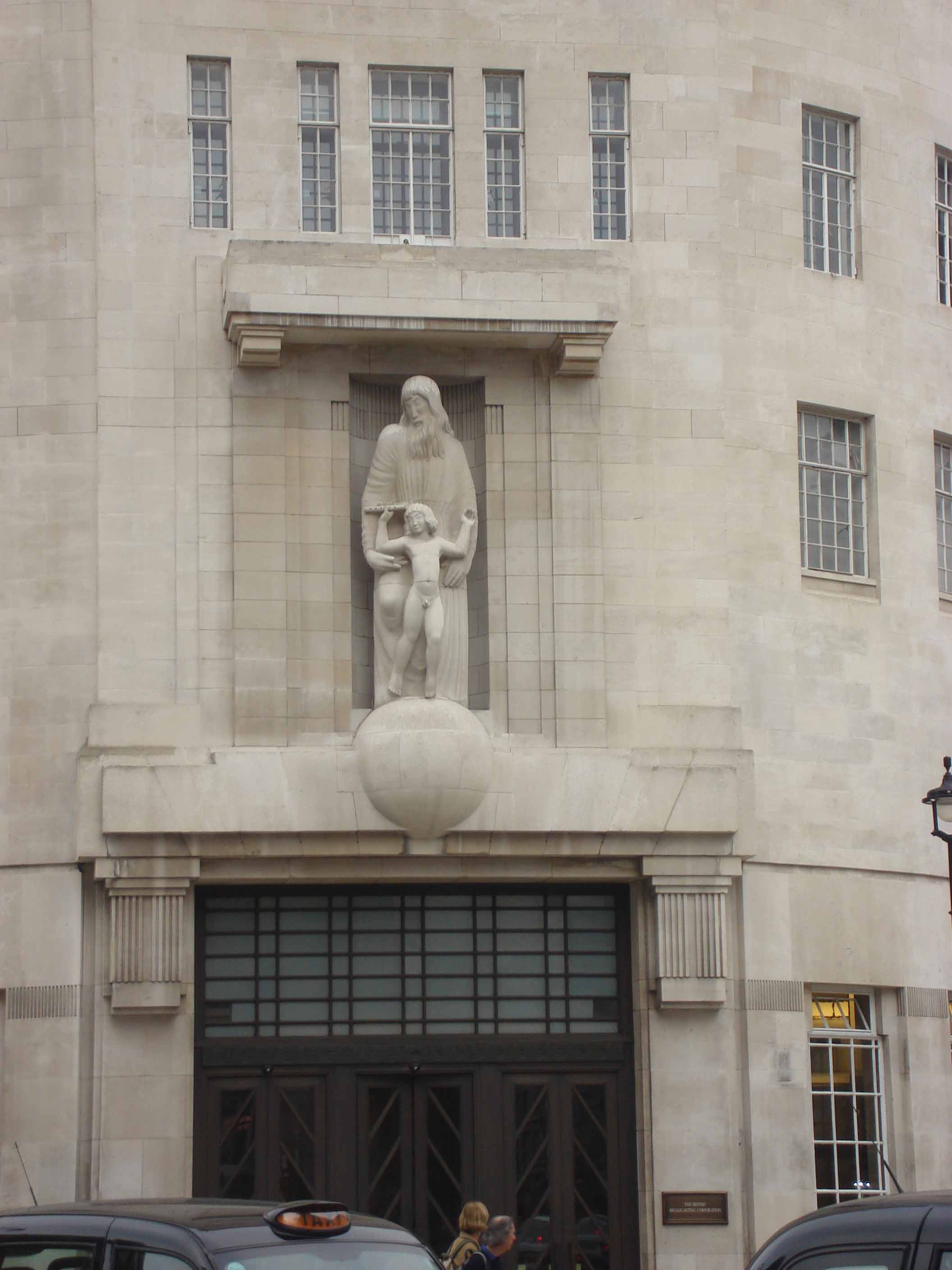 Prospero and Ariel on BBC Brodcasting House
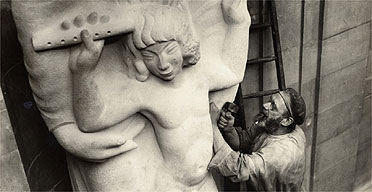 Gill with Prospero and Ariel on BBC Brodcasting House
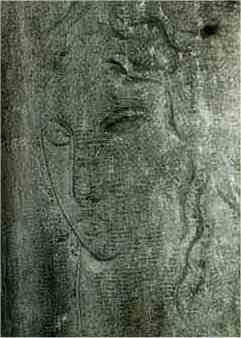 Sculpture discovered in 2006 on the rear of the Prospero and Ariel statue
 Bookmark
 Leeds War Memorial June 1923
Michael Sadler Building, Leeds University
Commissioned and presented by Sir Michael Sadler to the University of Leeds as a war memorial
to those members of staff who fell during the First World War, and dedicated by the Bishop
of Rippon on the 1st of June 1923
Much controversy surrounded Gill and his carving. Its unpopularity stemmed from Gills decision
to clothe his figures in modern dress, as his implied suggestion that capitalism results in greed,
which results in war.
The carving was called by Gill “A sermon in Stone” and includes two inscriptions.
The first is on the cornice and the second on the right hand panel. This panel also includes the hound
of St Dominic, the symbol of the Ditchling Guild of St Joseph and St Dominic.
The cornice inscription reads:-
“Go to now you very rich, weep and howl your miseries which shall come upon you. Your riches
are putrid." (James 5:1)
The panel inscription reads:-
“And when he had made as it were a little whip of cord, he ejected all from the temple and the
money of the moneychangers he poured out, and overthrew their tables. And he said do not make my
fathers house a house of commercialism” (John 2:15)
Leeds War Memorial June 1923
Michael Sadler Building, Leeds University
Commissioned and presented by Sir Michael Sadler to the University of Leeds as a war memorial
to those members of staff who fell during the First World War, and dedicated by the Bishop
of Rippon on the 1st of June 1923
Much controversy surrounded Gill and his carving. Its unpopularity stemmed from Gills decision
to clothe his figures in modern dress, as his implied suggestion that capitalism results in greed,
which results in war.
The carving was called by Gill “A sermon in Stone” and includes two inscriptions.
The first is on the cornice and the second on the right hand panel. This panel also includes the hound
of St Dominic, the symbol of the Ditchling Guild of St Joseph and St Dominic.
The cornice inscription reads:-
“Go to now you very rich, weep and howl your miseries which shall come upon you. Your riches
are putrid." (James 5:1)
The panel inscription reads:-
“And when he had made as it were a little whip of cord, he ejected all from the temple and the
money of the moneychangers he poured out, and overthrew their tables. And he said do not make my
fathers house a house of commercialism” (John 2:15)
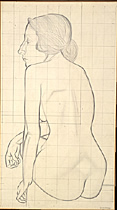 Seated Female
 In 1911 Gill started work with Jacob Epstein on a modern Stonehenge to be located in
the Sussex Downs for which he carved a large relief of a couple making love called
Ecstasy. Gill’s Ecstasy sculpture was the inspiration and model for his Divine
Lovers representing his visualisation of Christ as husband and the Church his bride.
Tate Gallery
In 1911 Gill started work with Jacob Epstein on a modern Stonehenge to be located in
the Sussex Downs for which he carved a large relief of a couple making love called
Ecstasy. Gill’s Ecstasy sculpture was the inspiration and model for his Divine
Lovers representing his visualisation of Christ as husband and the Church his bride.
Tate Gallery
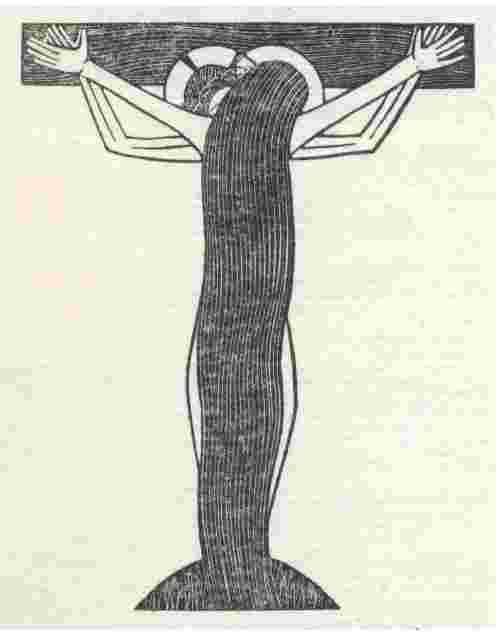 The Divine Lovers or the Nuptials of God, was first used in the 1923 issue of The Game
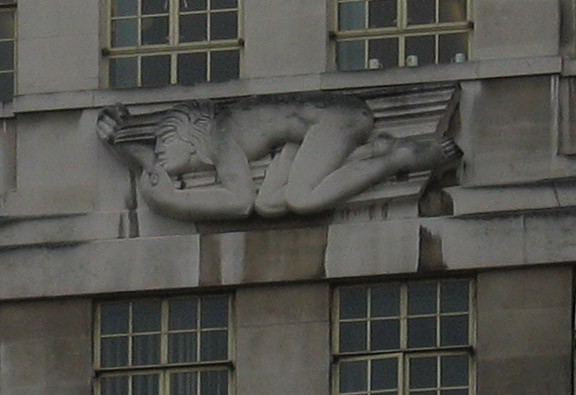 The North Wind, above St James underground station, London
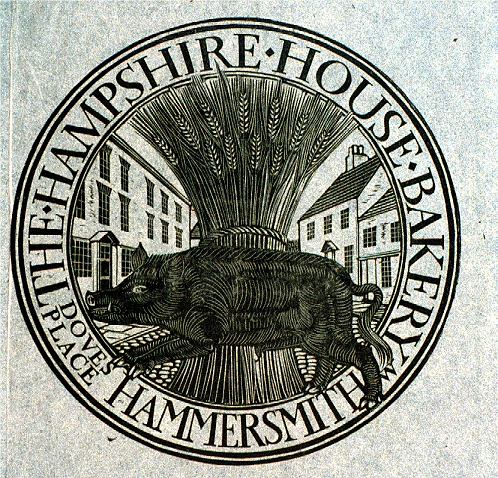 Early poster produced by the St Dominic’s Press, that includes Gill’s Hog and
Wheatsheaf wood engraving
Early poster produced by the St Dominic’s Press, that includes Gill’s Hog and
Wheatsheaf wood engraving
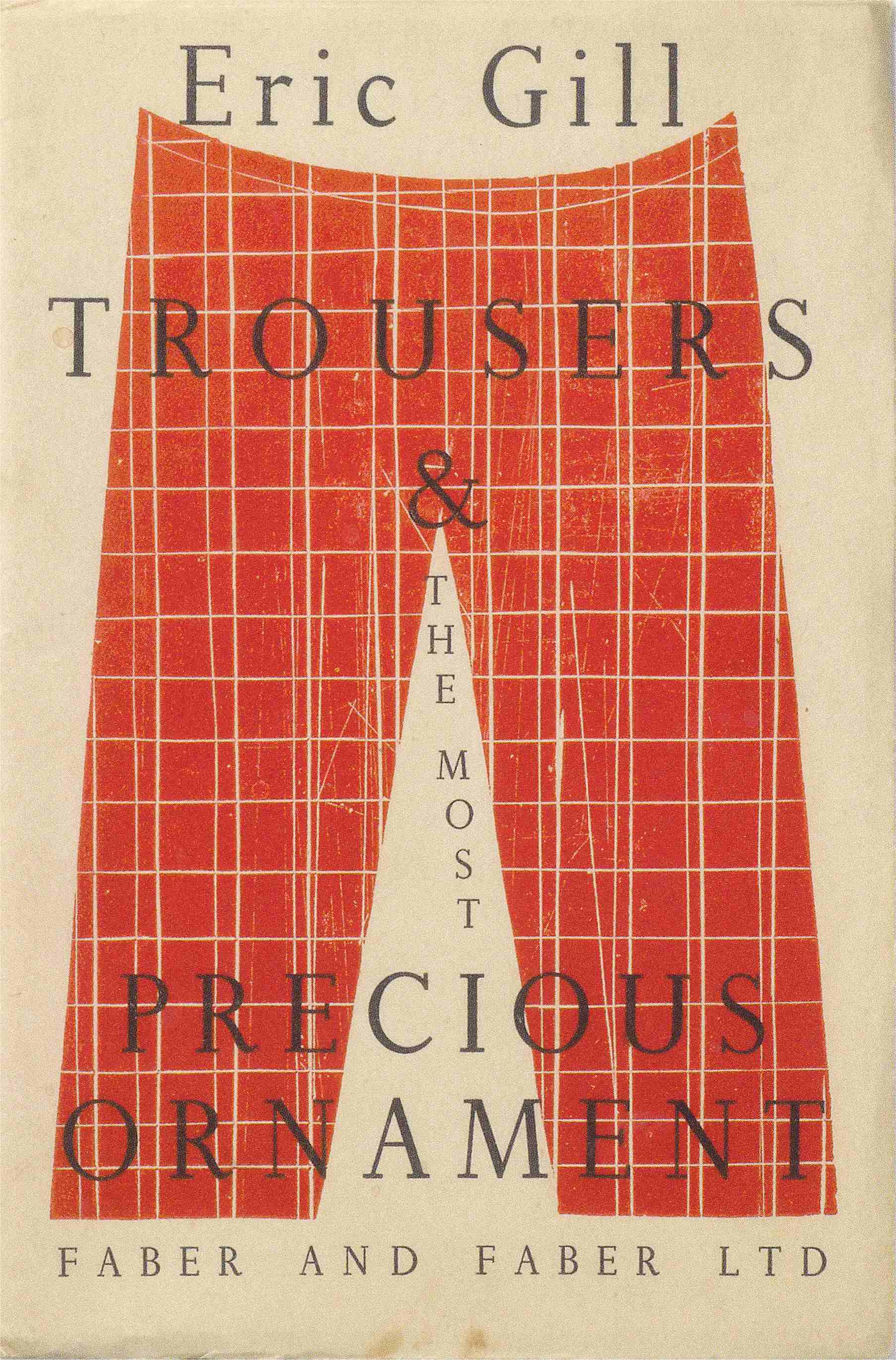 Book cover for "Trousers & The Most Precious Ornament"
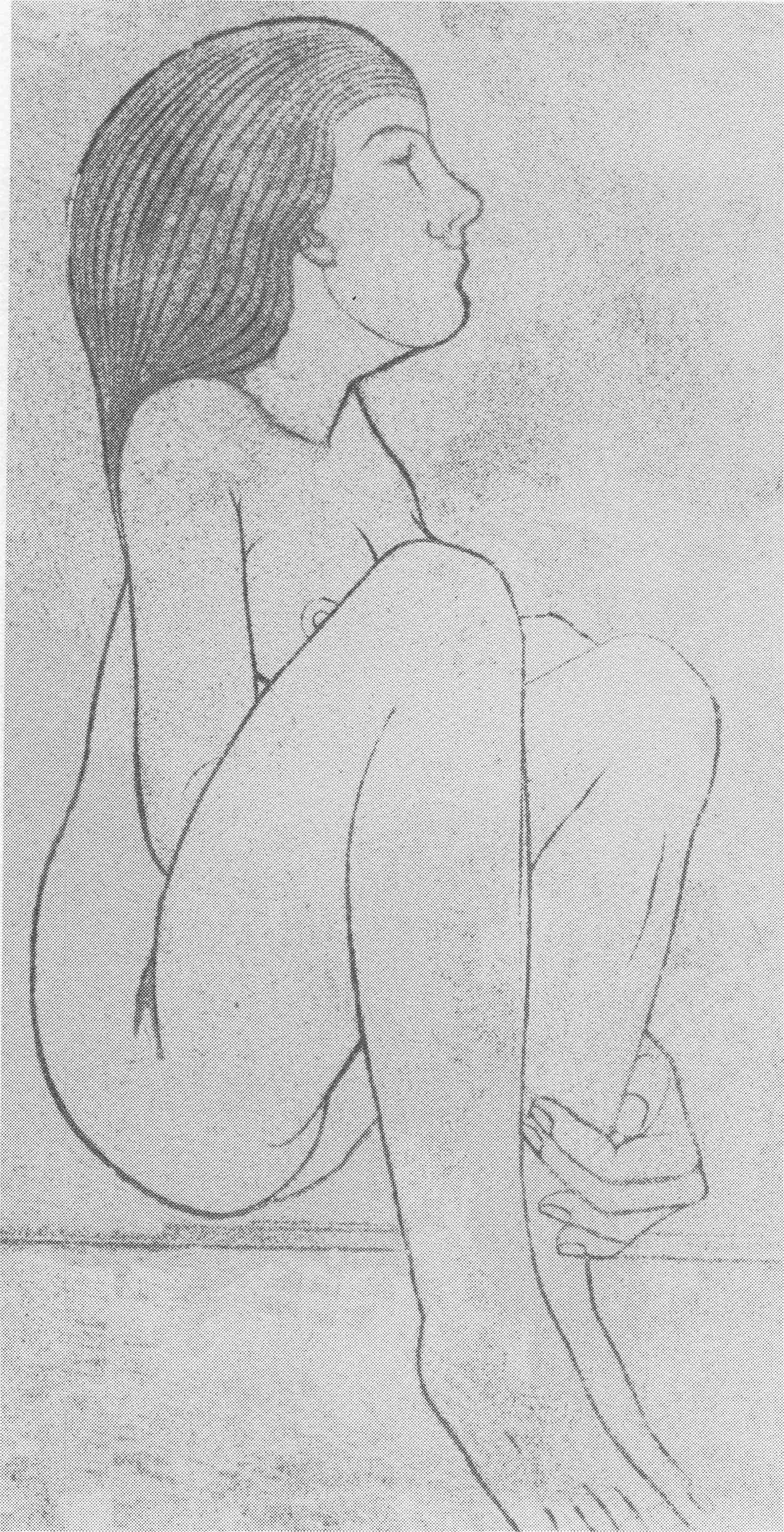 The 'Gladys panel'
The sculpture can still be found embedded in a wall of "The Blue House", which is situated
to the north end of Ditchling village, it was formerly the home of Gill's close friend,
Amy Sawyer. During 1911-1913 gill was linked to Amy, who was a painter and playwright.
He signalled his friendship for her, by giving her the sculpture which is now
known as the 'Gladys Panel' for Christmas in 1913. It is an outline figure of a nude girl
which was incised during 1912 into a tablet of Hopton-wood stone, and is so-called because
it was modelled by Gills younger sister Gladys. Gill first worked on the 'Gladys Panel'
on the 30th of April 1912 when he took some three hours in making a chiselled outline in stone.
The 'Gladys panel'
The sculpture can still be found embedded in a wall of "The Blue House", which is situated
to the north end of Ditchling village, it was formerly the home of Gill's close friend,
Amy Sawyer. During 1911-1913 gill was linked to Amy, who was a painter and playwright.
He signalled his friendship for her, by giving her the sculpture which is now
known as the 'Gladys Panel' for Christmas in 1913. It is an outline figure of a nude girl
which was incised during 1912 into a tablet of Hopton-wood stone, and is so-called because
it was modelled by Gills younger sister Gladys. Gill first worked on the 'Gladys Panel'
on the 30th of April 1912 when he took some three hours in making a chiselled outline in stone.
 Estin Thalassa 1910
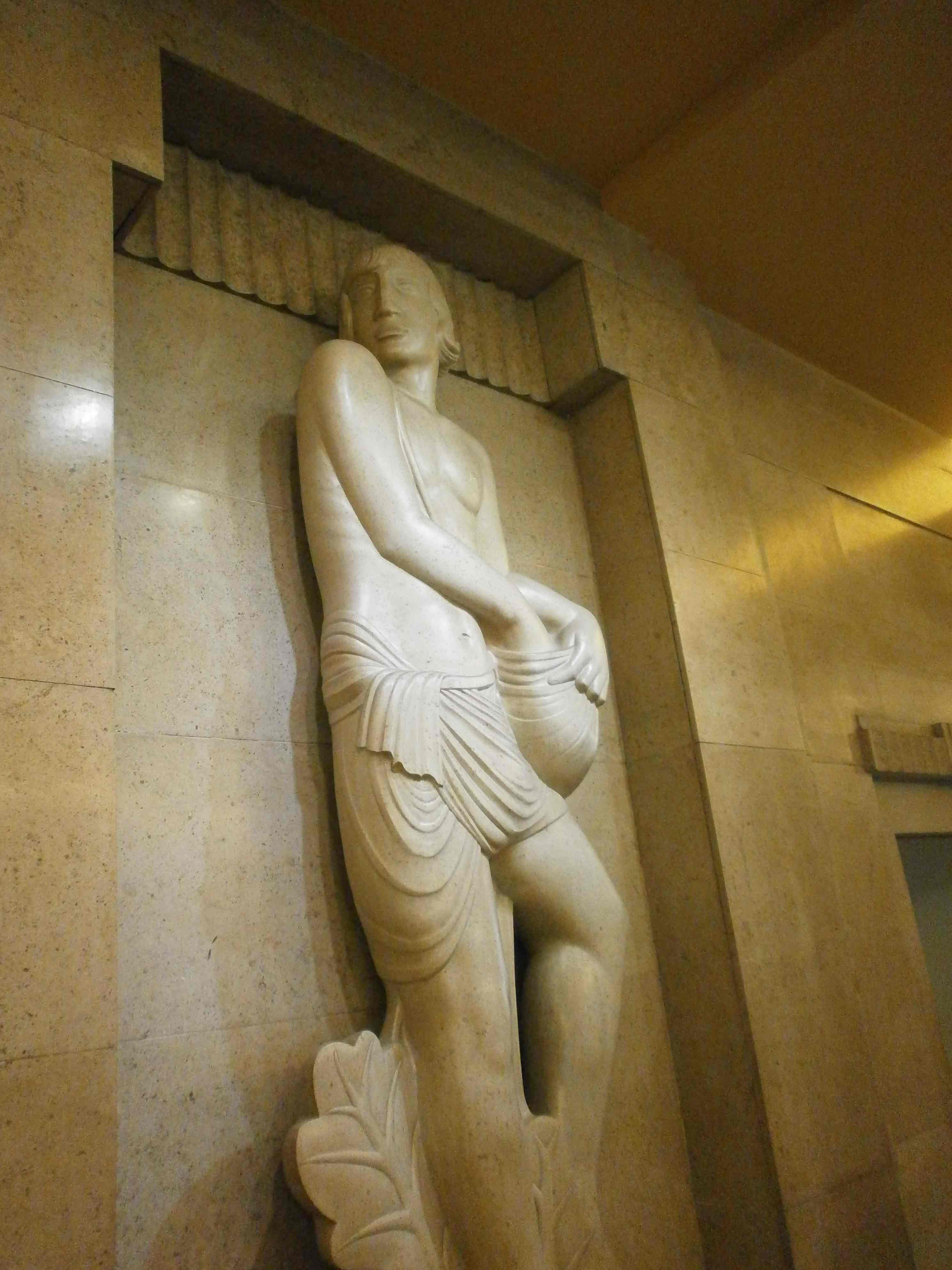 Model for The Sower, BBC Broadcasting House
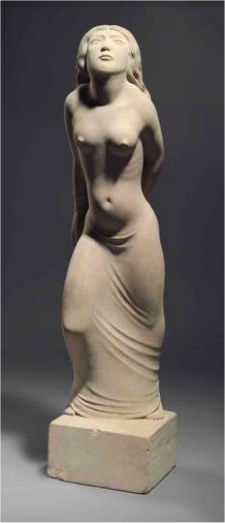 Joan of Arc 1932
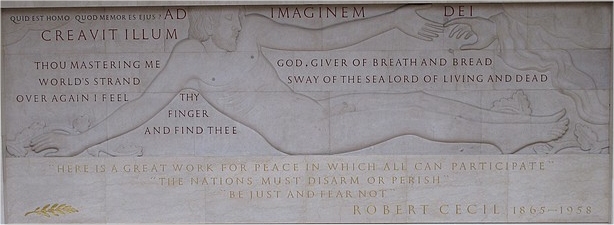 The bas-relief in marble above the main entrance to the League of Nations council chamber,
entitled The Creation of Man. Donated to the League of Nations by the United Kingdom in
1938
The bas-relief in marble above the main entrance to the League of Nations council chamber,
entitled The Creation of Man. Donated to the League of Nations by the United Kingdom in
1938
 Gill with the bas relief for the League of Nations Palace 1938
 Chirk War Memorial North Wales, 17th of October 1920
Return to first page Next page